
December 28, 2010
The product development at Saturday Night Life is perfectly consistent with the evolutionary predictions: Through out the week, that writing team comes up with about 800 jokes. On Friday night, they sit together and whittle it all the way down to the 100 jokes they like best, and out of that 100 the producer picks about 30. And out of that 30—- of the initial 800 jokes written during the week—- only about 16 or 20 jokes make it to a Saturday Night Live broadcast.
August 28, 2010
Chris Freeman, one of the great scholars of the economics of science and technology, has died. Read the remembrances of colleagues, students and readers here. Luc Soete’s, for example, writes: Over those fifty or so last years Chris influenced thousands of researchers, policy makers and students across the world in the fields of science and public policy, research and development measurement, the history of social science studies, Schumpeterian and evolutionary economics, research evaluation, innovation management, technology and innovation policy as well as in making both macro- and micro-economics, international trade and economic history more aware of the central role of technological, institutional and social change. Funnily enough, he did so, not by using Information and Communication Technologies, which he had studied so much, but through personal contact, through being available to all without any exclusion and through his openness to alternative views and ideas. Obituaries. A list of all his publication is here.
July 17, 2010
Edge.org published a stimulating interview with W. Brian Arthur on his new book, The Nature of Technology. After autobiographical comments that may not interest all readers, Arthur gives an overview how the economy evolves as a consequence of postiive and negative feedback mechanism. He then moves on to this idea of technological innovations. Students of history of technology will not find that Arthur’s theory is particular novel. (To get a sense, the great historian Payson Abbot Usher has conceptualized technological change in 1929/1945, read the review essay of A History of Mechanical Invention on Eh.net.) Arthur, consisent with the theory of innovation that sees them as recombining elements in new ways, marries old ideas with novel ones that come out of complexity theory. For a recent overview paper of the best ideas for studying relationship between technological and industrial evolution, read Murmann and Frenken.
June 5, 2010
The full program of the Schumpeter Society Meeting in Aalborg, Denkmark is now posted.
Update June 22: Full papers of conferene are available here.
Photos from the Conference are now up. Gallery 1 Gallery 2
May 2, 2010
Agnus Maddison died. What economic historian has not relied on his historical GDP time series? Read the informative obituary in the Economist.
March 26, 2010
A workshop bringing together Business Historians and Evolutionary Economists is taking place at Trinity College in Dublin. Oveview information on the workshop and the presentation sldies have been posted in the discussion forum.
Introducing Economic Evolution Net
For a number of years, we have planned a complementary website to Evolutionary Theories in the Social Sciences that would serve as a central resource and meeting place for people who interested in empirical research on economic change. The English language features of Economic-Evolution.Net are now fully implemented. We recently finished the EEpedia, which functions as a collaborative encyclopedia collecting empirical facts on economic evolution. We have also added a software tool for a collaborative bibliography. Finally, we have created a convenient list of data sources to be used in research on economic evolution. Explore these feature by clicking on the menus to your left. To allow people who are not comfortable writing in English to participate in the EEpedia project, we are presently creating the German, Finnish, Norwegian and Swedish language versions of the EEpedia. Other language versions will follow later. If you want to receive automatic emails about new book reviews, data sources, conferences or working papers, can you subscribe to this service here.
November 15, 2009
Richard Nelson gave an interview in June 2002 to Margherita Fronte that still makes a good read today. In the interview, he explains why he developed evolutionary economics, discusses the relationship between science and technolgy, and takes a stand on what kinds of inventions should be patentable. Click on Read more for the full interview or go the website of the Fondazine Bassetti.
August 30, 2009
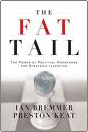
Telock does us the service of giving a close reading of three books that what to overcome the obstacle that Yogi Berra identified in his qib: “Prediction is very hard, especially about the future.”
The Fat Tail: The Power of Political Knowledge for Strategic Investing by Ian Bremmer and Preston Keat.
The Predictioneer’s Game: Using the Logic of Brazen Self-Interest to See and Shape the Future by Bruce Bueno de Mesquita
The Next 100 Years: A Forecast for the 21st Century by George Friedman
Read Telock’s excellent review at National Interest.
January 18, 2009
The Economist describes how the current strength of the the jet engine business come about. An understanding of the firm’s success requires some understanding of the technology that goes into its civil-aircraft engines. This is not just Rolls-Royce’s biggest business, it is also the one that both felled the company in 1971 and proved to be its salvation two decades later, Rolls-Royce’s triumph was not to build a slightly better engine and thus earn a temporary technological edge, but to design a completely different one. Remarkably, it did so from a position of weakness.
Read more...
April 20, 2008
A symposium on the Varieties of Knowledge in the Economy with Carliss Baldwin, Richard Langois, Johann Peter Murmann and Richard Nelson will take place at the Schumpeter Conference in Brazil. More Details.
July 15, 2007
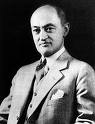
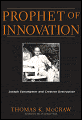
Robert Solow reviews Thomas K. Mccraw’s new biography of Joseph Schumpeter in the New Republic. Read the review of Prophet of Innovation: Joseph Schumpeter and Creative Destruction. Richard Langlois has also published a very useful review on EH.net.
August 1, 2006
The Comparative Industry Studies (CIS) Project
Evolutionary economists have articulated powerful theories about how industries change. During the last twenty years economists, sociologists, and business school scholars have begun to study empirically how particular industries develop over long periods of time. Because scholars frequently do not analyze the same aspects (variables), it often difficult to compare systematically across industries and figure out what causes lie behind the similarities and differences in patters of industry evolution.
To make it easier in future studies to compare across industries and come up with causal explanations, we need to formulate an analytical framework, i.e. a common list of characteristics that future studies could trace. Such a framework needs to combines concepts from traditional industrial organization economics, evolutionary economics, innovation studies, and institutional theory broadly defined. Participate in formulating this framework by going to the Comparative Industry Studies Project page in the EEpedia.
November 02, 2004
Johann Peter Murmann compares the development of the synthetic dye industry in Great Britain, Germany, and the United States through the lenses of evolutionary theory. As Murmann demonstrates, a complex coevolutionary process linking firms, technology, and national institutions resulted in very different degrees of industrial success among the dye firms in the three countries. The book won Joseph Schumpter Prize and the Stanley Reiter in 2004.
Download Introductory Chapter
August 2004
Timur Kuran has written a fascinating paper on Why the Middle East is economically underdeveloped. Anyone interested in social evolution will find this timely paper worth reading. Download Paper
July 02, 2004
The flat panel display (FPD) industry was the first new manufacturing industry to fully emerge in a global economy defined more by trade in knowledge than in physical products. Drawing upon interviews with over 160 managers and scientists from around the world who helped found the FPD industry, the authors identify successful strategies for knowledge-driven competition. They also make policy recommendations for business and government decision makers concerned with maintaining a healthy technology base
July 02, 2004
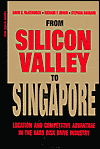
The book explains how decisions about location helped US firms achieve global dominance in the hard disk drive industry. Details how American firms were able to develop two complementary industry clusters, with fundamental research and product development concentrated in the US (principally California), and manufacturing in Southeast Asia. This example offers new perspectives on the sources of industrial leadership, strategic behavior, and the geographic evolution of industry.
June 2004
A Workshop on Adaptation vs. Selection in Industrial Change will take place at the Academy of Management Meeting in New Orleans, August 7, 2004.
January 17, 2003
In The Gifts of Athena, Joel Mokyr argues that the growth explosion in the modern West in the past two centuries was driven not just by the appearance of new technological ideas but also by the improved access to these ideas in society at large - as made possible by social networks comprising universities, publishers, professional sciences, and kindred institutions. He shows that changes in the intellectual and social environment and the institutional background in which knowledge was generated and disseminated brought about the Industrial Revolution."
September 2002
A Workshop on Cognitions and Capabilities is taking place at Harvard. Click here for details.
May 2002
A workshop on “Empirical research on routines in business and economics: Towards a research program” will be held on the November 3-4 in Odense, Denmark. Click here for a call for papers.
April 2002
The Fourth International Workshop on Institutional Economics will be held on the July 3 and 5 at the University of Hertfordshire, UK. Click here for details.
March 2002
A roundtable on “Resources, Routines and Industrial Dynamics in the Experimentally Organized Economy” will be held on the October 24 and 25 in Hirtshals, Denmark. Click here for details. The first English translation of the seventh chapter of Schumpeter’s 1912 classic “Theory of Economic Evolution” will appear in a special issue on Industry and Innovation. Click here for a table of contents.
May 2001
Evolutionary Theory in Management and Organization Theory at the Beginning of a New Millennium: A Symposium on the State of the Art and Opportunities for Future Research in Evolutionary Theory. You can now read a transcript of the symposium that took place on Aug 7 2000, in Toronto, Canada. The symposium was organized by Johann Peter Murmann, and the speakers were Howard Aldrich, Dan Levinthal and Sid Winter. Click here for conference details.
November 2000
A conference took place in honor of the Richard R. Nelson at Columbia University in New York. Click here for details on the conference and the papers presented. You can read here Sidney Winter’s speech The Evolution of Dick Nelson and go on a photo tour.
Page 2 of 3 pages < 1 2 3 >














 Tell a Friend